Table of Contents
Ordering landscaping materials can feel like a guessing game. Order too little, and your project stalls halfway through. Order too much, and you are left with an expensive pile of stone sitting in your driveway for months.
This is where crushed rock big bags shine. They offer a clean, manageable, and surprisingly cost-effective way to buy exactly what you need. Whether you are building a new driveway, laying a path, or improving drainage, understanding bag sizes and coverage is the key to a smooth project. Let us break it down clearly so you can order with confidence.
Why Choose Crushed Rock in Big Bags?
Before we talk numbers, it helps to understand why bulk bags have become so popular with both DIYers and professional landscapers.
- No mess, no stress: Loose loads dumped on your street can attract complaints from neighbours. Big bags sit neatly on your driveway, keeping the area clean.
- Easy storage: If the weather turns bad, you can cover the bag with a tarp and carry on when the sun returns. Try doing that with a loose pile.
- Accurate ordering: Each bag holds a known weight and volume. You pay for what you get, and calculating your needs becomes much simpler.
Now, let us get into the specific options available and what they can do for your outdoor space.
Standard Sizes of Crushed Rock Big Bags
Not all bulk bags are created equal. While the classic tonne bag is the industry standard, you have options depending on the scale of your work.
The Classic 800kg – 850kg Bag
This is the builder’s favourite. It holds roughly 0.5 to 0.6 cubic metres of material. For a typical two-car driveway sub-base, one or two of these will usually do the job. It is heavy enough to be great value, but still manageable for most delivery vehicles.
The Half-Bag / Mini Bag (400kg – 500kg)
Perfect for smaller projects like a garden path or a shed base. These are easier to move around with a standard pallet truck, and you can often position them right next to your work area. If you are working alone and plan to wheelbarrow everything by hand, starting with a half-bag is a wise choice.
The 20kg – 25kg Small Bag
Some suppliers also offer rubble sacks. These are ideal for very small touch-ups, filling potholes in a gravel drive, or if you simply have no room for a bulk bag. They are the most expensive per kilo, but the convenience for tiny jobs is unbeatable.
Practical Uses Around Your Property
Crushed rock big bags is incredibly versatile. The angular edges lock together under compaction, creating a stable base. Here is where it performs best.
Driveway Sub-Bases: This is the number one use. A properly compacted layer of crushed rock prevents your driveway from sinking or developing ruts over time. Aim for a depth of at least 100mm after compaction for a car, and 150mm for heavier vehicles.
Drainage Projects: Because the stone contains a mix of fines and larger aggregate, water can drain through it effectively. It is excellent for backfilling behind retaining walls or creating a soakaway base.
Paths and Patio Foundations: For a pedestrian walkway, a 75mm compacted layer provides a solid base for paving slabs or a gravel top layer. The stability you get from the angular stone is far superior to rounded pea gravel.
For decorative top layers, you might explore other aggregate options, but for the structural base, crushed rock big bag is the workhorse. Some projects also benefit from using crusher fines bags for the final levelling layer before laying pavers, as the finer material helps create a perfectly smooth screed.
What About Different Types of Crushed Rock?
There is often confusion about the different grades available. Your choice depends on whether you are building a base or creating a finished surface.
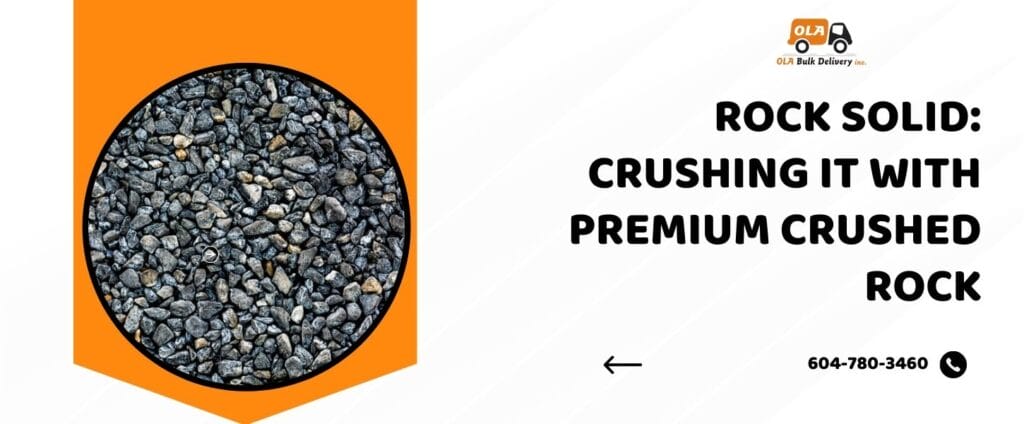
A common and highly recommended option is 3/4 clear crush rock bags. This grade contains stone that is roughly 20mm in size, with very little sand or fine dust. It is “clear” because the fines have been screened out. This makes it fantastic for drainage applications, French drains, or as a decorative gravel top layer where you want a clean, consistent look without dusty particles washing away.
The standard crusher run, by comparison, includes everything from stone dust up to larger chunks. It compacts like concrete and is far better for structural bases. Knowing this distinction saves you from ordering the wrong material for the job.
Your Crushed Rock Coverage Calculator
Let us do some simple maths so you can estimate your needs accurately. The golden rule: coverage depends on the depth you need.
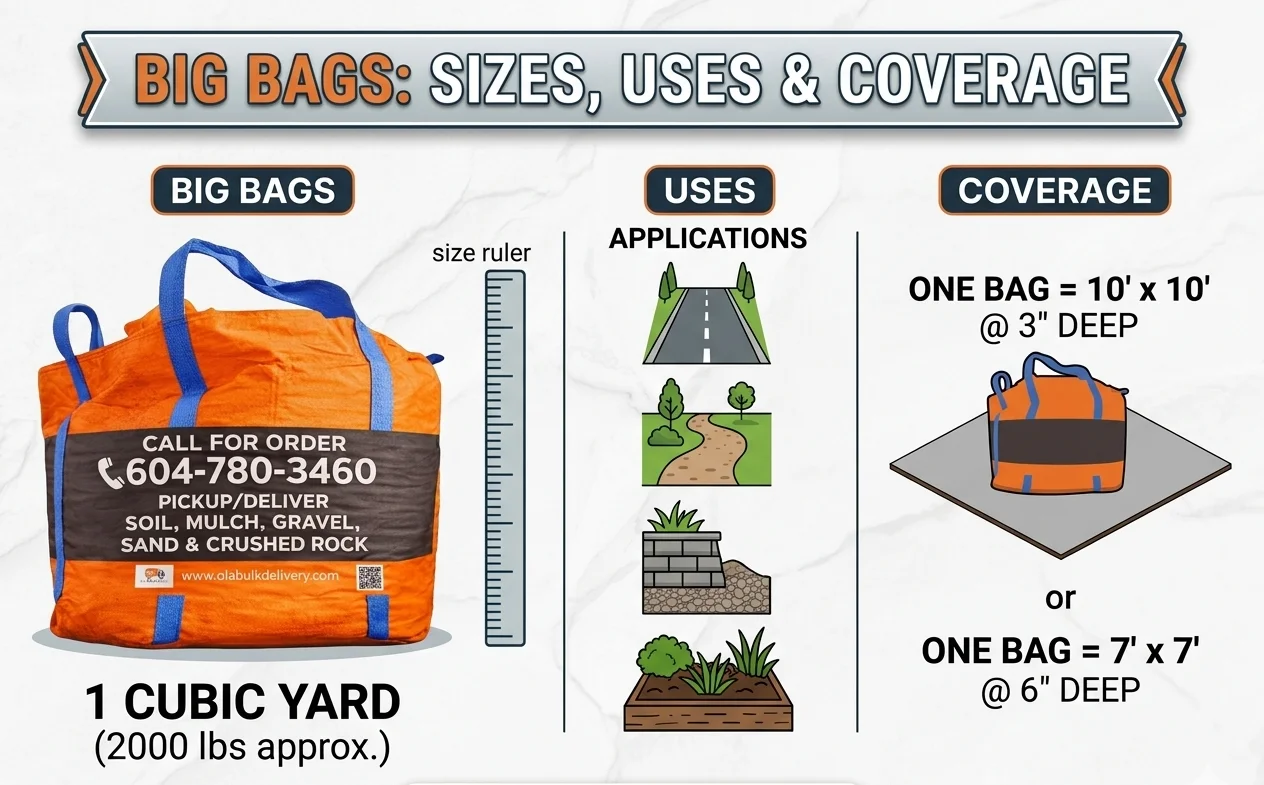
One standard bulk bag (approximately 0.5 to 0.6 cubic metres) will cover:
- At 25mm depth: roughly 20 – 24 square metres
- At 50mm depth: roughly 10 – 12 square metres
- At 75mm depth: roughly 7 – 8 square metres
- At 100mm depth: roughly 5 – 6 square metres
- At 150mm depth: roughly 3 – 4 square metres
How to calculate your project:
- Measure the length and width of your area in metres.
- Multiply them to get the square meterage.
- Decide your required depth in millimetres.
- Use the table above to find the approximate coverage per bag.
- Divide your total area by the coverage figure.
Example: You have a driveway area of 30 square metres, and you want a 100mm sub-base. One bag covers about 5-6 square metres at that depth. 30 divided by 5.5 gives you roughly 5.5 bags. I would round up to 6 bags to allow for slight compaction loss.
Always round up by about 5-10%. It is far better to have a small pile left for future touch-ups than to run short on a Saturday afternoon.
Quick Tips Before You Order
- Check delivery access: A crane offload truck needs roughly 3 metres of width and enough overhead clearance from trees and power lines.
- Ground conditions: Bulk bags are heavy. They will sink into soft ground, so have some plywood boards ready to sit them on.
- Order together: If you need multiple bags for multiple projects, ordering together often saves on delivery charges.
Ready to Start Your Project?
Choosing crushed rock big bags removes the guesswork from your landscaping job. With the right size, the correct grade, and a few smart coverage calculations, you can achieve a professional-quality base that lasts for decades. Take your measurements today, use the calculator above, and place an order that gets it right the first time.
FAQ
What area does a bulk bag of crushed rock cover?
One standard bulk bag (around 800kg) covers approximately 10 to 12 square metres at a 50mm depth. For a thicker 100mm sub-base, expect coverage of about 5 to 6 square metres per bag.
What is crushed rock used for?
It is mainly used for driveway sub-bases, path foundations, patio bases, and drainage backfill. Its angular shape locks together tightly when compacted.
Can I lay crushed rock directly on soil?
Yes, but you should remove any soft topsoil and compact the ground first. For heavy-use areas like driveways, laying a weed membrane underneath is a smart extra step.
Do I need a special delivery for big bags?
Yes. We deliver using a crane offload truck, so please ensure you have about 3 metres of access width and clear overhead space from trees and cables.
Do you offer delivery on all orders?
We deliver locally as standard. At checkout in our online shop, simply enter your postcode to see delivery options, costs, and estimated arrival times for your area.
Can I order crushed rock big bags online?
Absolutely. You can browse sizes, check real-time stock, and place your order directly through our online shop. It is the quickest way to secure a delivery slot.