
Table of Contents
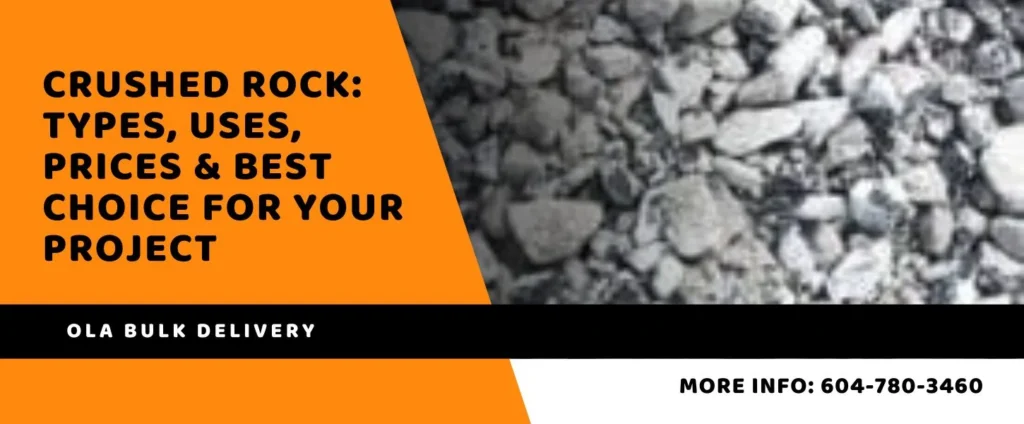
Choosing the right material is one of the most important steps in any construction or landscaping project. Many homeowners and contractors struggle to decide between different aggregate materials because they look similar but serve different purposes. Among these materials, crushed rock is widely used due to its strength, durability, and versatility. Whether you’re building a driveway, preparing a base for paving, or improving drainage, this material can play a key role in your project’s success.
What Is Crushed Rock?
Crushed rock is produced by crushing large stones into smaller pieces using industrial machines. Unlike natural gravel, rock has sharp edges and rough surfaces, which makes it ideal for compaction and heavy-duty applications.
It is widely used in:
- Construction projects
- Landscaping works
- Road and driveway building
- Drainage systems
Because of its structural strength, it is commonly used in both residential and commercial projects, including roads, foundations, and landscaping designs.
Types of Crushed Rock We Supply
Different projects require different sizes and grades. Here are some of the most commonly used options:
1. 3/4 Clear Crush Rock – Yard
This is one of the most versatile materials for construction and landscaping.
Best for:
- Driveways
- Parking areas
- Base layers
- Landscaping projects
2. Crusher Fines – Yard
Crusher fines are smaller particles that compact tightly and create a smooth surface.
Best for:
- Walkways
- Pathways
- Paver base
- Decorative landscaping
3. 1/2 Clear Crush – Yard
Smaller crush rock size with excellent stability.
Best for:
- Driveways
- Garden paths
- Base for paving stones
4. 3 Inch Clear Crush
Large crush rock stones for heavy-duty use.
Best for:
- Drainage systems
- Large foundations
- Industrial construction
5. Aqua Clear Crush 9mm – Yard
A decorative option with unique texture and color.
Best for:
- Garden landscaping
- Decorative pathways
- Outdoor design
How Crushed Rock Compares with Other Materials
Many customers also consider other landscaping and construction materials. Here’s a simple comparison:
Gravel
Gravel has smooth, rounded stones and is often used for decorative landscaping and drainage.
Sand
Sand is fine and soft, commonly used in concrete, paving, and leveling surfaces.
Soil
Soil is used for gardening, planting, and lawn preparation.
Mulch
Mulch is used to improve soil quality and enhance garden appearance.
Common Uses in Construction and Landscaping
This material is widely used in:
- Road construction
- Driveways and parking lots
- Building foundations
- Drainage systems
- Landscaping projects
- Garden pathways
- Base for concrete and paving
It is one of the most versatile aggregate materials available.
Key Benefits
High Strength and Durability
It provides excellent load-bearing capacity, making it suitable for heavy-duty applications.
Better Compaction
Sharp edges help it compact tightly, creating a stable base.
Cost-Effective
Compared to many decorative stones, it offers great value for money.
Versatile Applications
Suitable for both residential and commercial projects.
FAQs
What’s the difference between gravel and crushed rock?
Gravel is naturally rounded, while crushed stone is mechanically broken and has sharper edges, making it stronger for construction purposes.
What is crushed rock called?
Crushed rock is also known as crushed stone, aggregate, or quarry stone.
Is it cheaper than gravel?
Prices vary by location and size, but it is often more affordable than decorative gravel.
What’s cheaper: crushed stone or gravel?
Prices vary, but crushed stone is often more affordable than decorative gravel, depending on size and location.
What should be placed underneath it?
Typically, a base layer of compacted soil, sand, or landscape fabric is used.